
Back to all use cases

AI-Powered Case Evaluation for Social Media MDL

Pattern Data helps law firms rapidly and deeply evaluate social media mental health claims earlier by reviewing evidence and medical records to identify qualifying injuries and filter ineligible claims.
Socia Media MDL
Military and Service Documents

Identify Qualifying Injuries

Screen for injuries like social media addiction, anxiety, depression, self-harm, and eating disorders, while flagging potential disqualifiers such as pre-existing conditions or unrelated risk factors.

Identify Exposure, Injury, and Treatments

Assess Case Strength and Eligibility

Use structured evaluation criteria to surface strong claims and deprioritize cases with unclear causation or pre-existing diagnoses.

intake

Customize Review Workflows by Injury Type

Adapt workflows for adolescent mental health claims, including automated tagging for psychiatric treatment, therapist records, or ADHD medication history.

strategic

Generate Structured Claimant Profiles

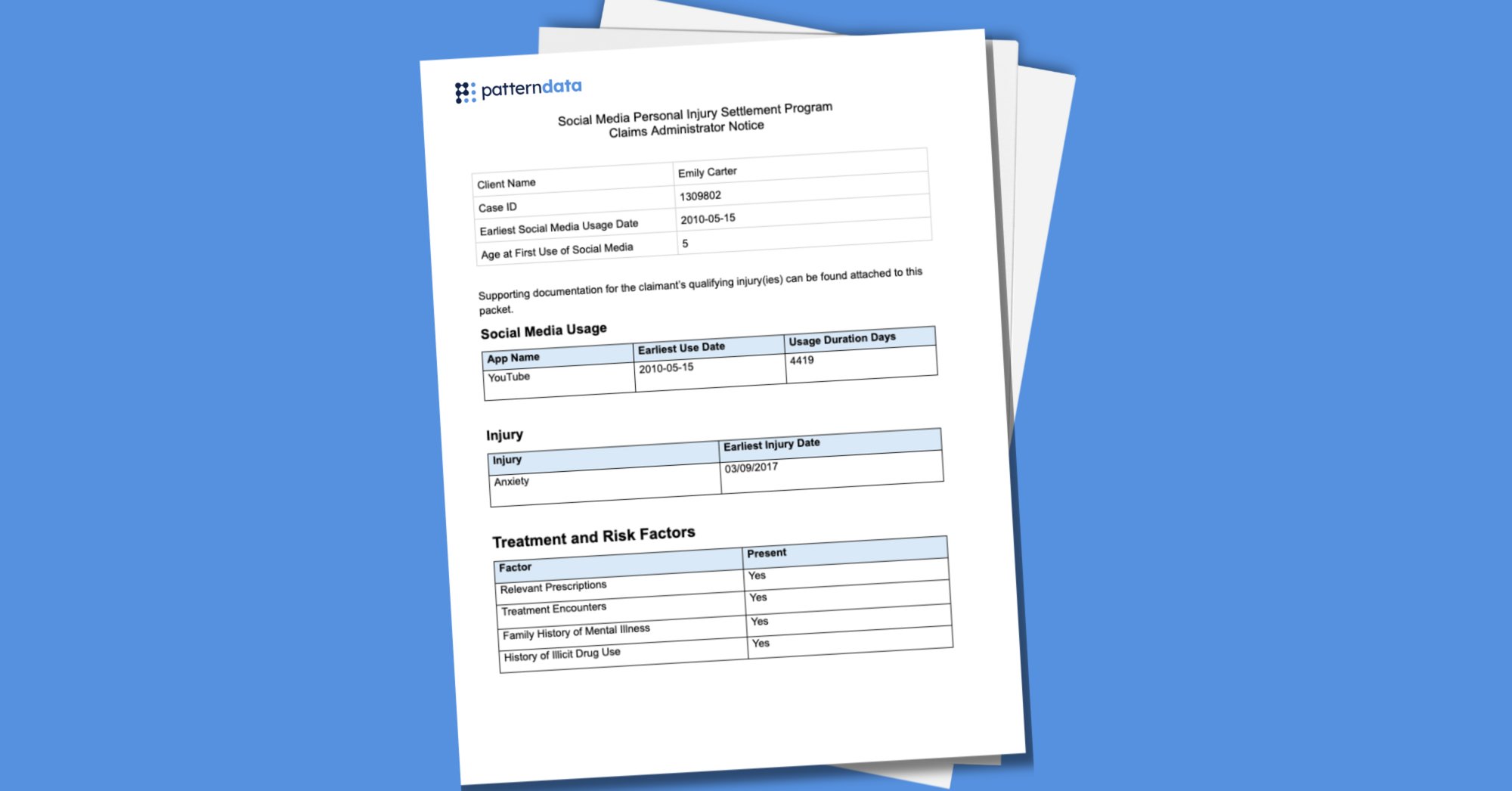
Automatically extract and organize key information from claim submissions, medical records, and treatment history to build consistent, litigation-ready profiles.
What to look for in the Social Media litigation claims

Pattern fully understands Social Media MDL mental health litigation and the factors that influence case strength and weaknesses.

Primary injuries such as depression, anxiety, body dysmorphia, eating disorders, suicidal ideation, or self-harm

Evidence of treatment, including therapy, psychiatric care, or mental health medications.

Relevant risk factors like long-standing prior diagnoses or family history of mental illness

Tag and Bookmark Key Records

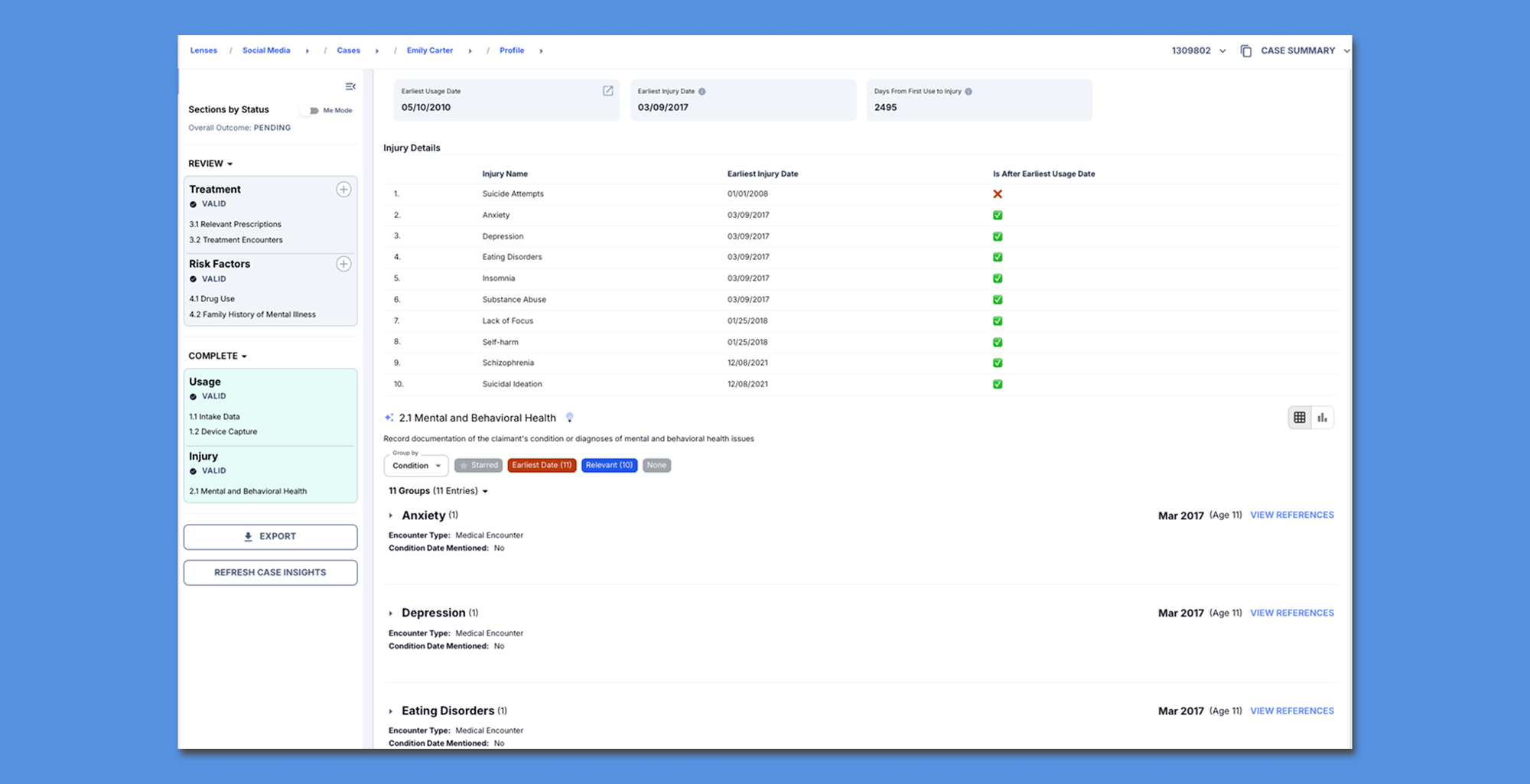
Identify and reference specific notes related to behavioral health, diagnoses, and relevant platform usage.
SocialMedia_TagsBookMark_SC (2)

Generate Social Media MDL claimant profiles

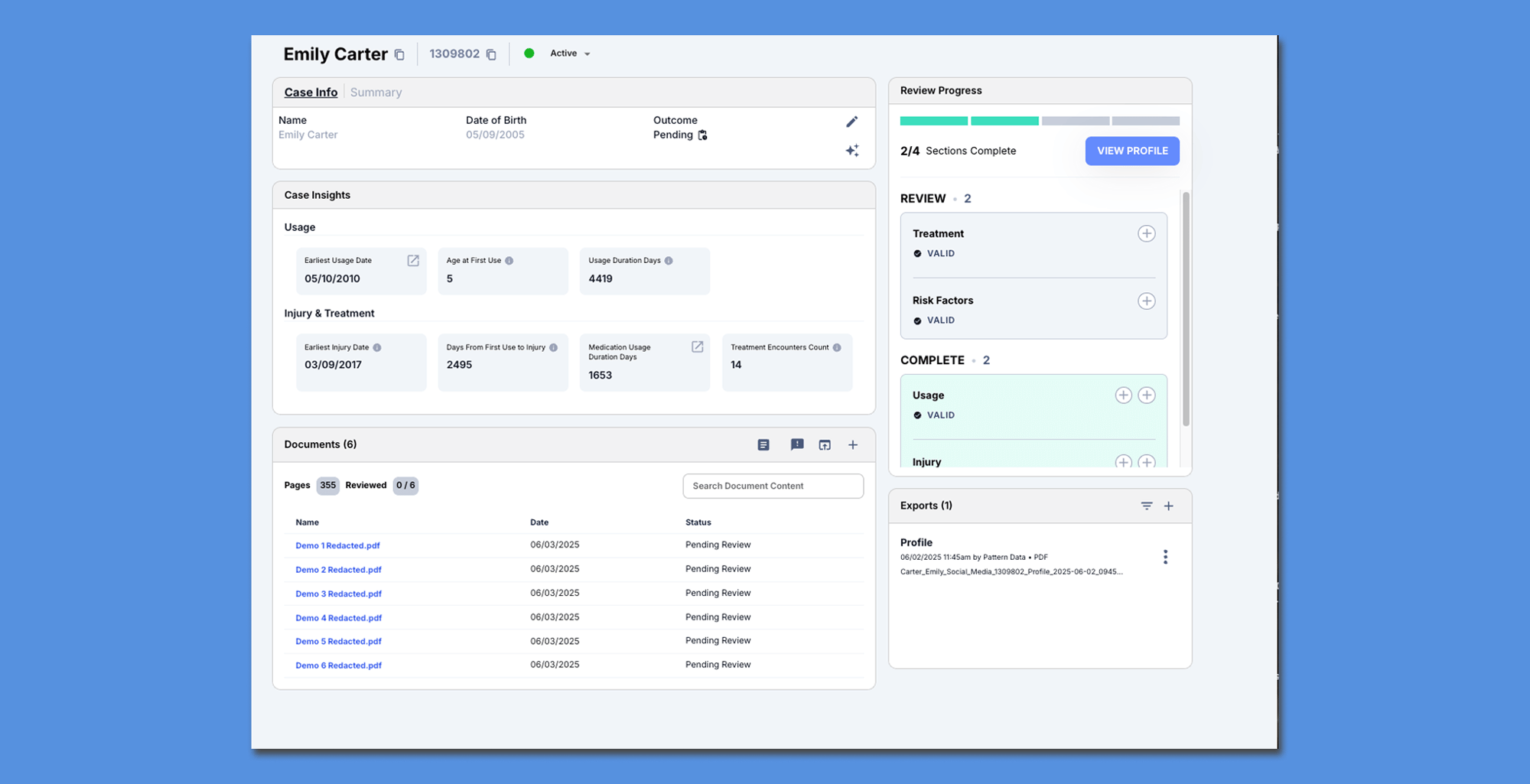
Extract and organize data from medical records to build detailed profiles of Social Media claimants, providing a clear view of case strengths.
SocialMedia_ClaimantProfile_SC (2)

Track Claim Inventory Across Mental Health Categories

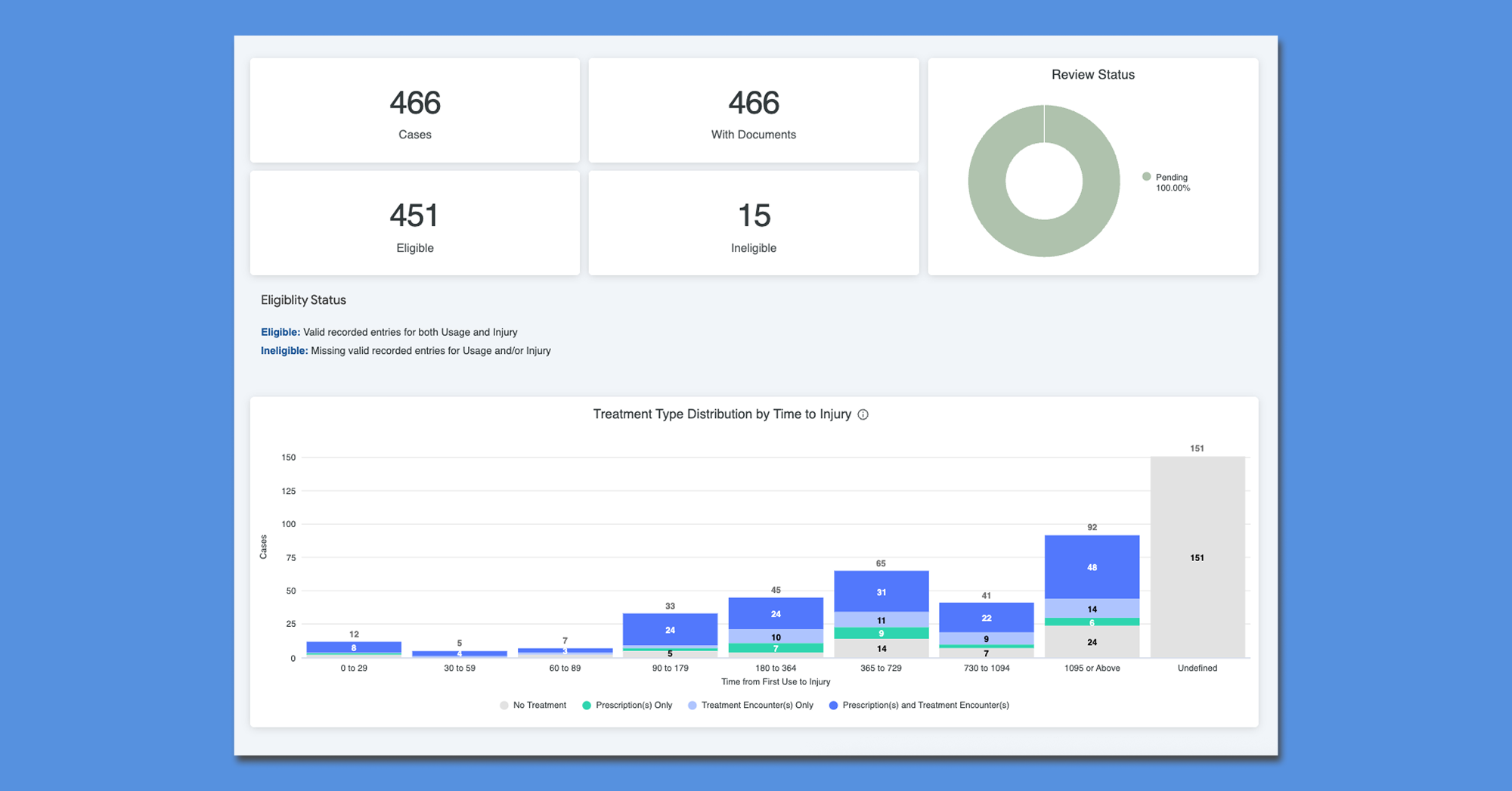
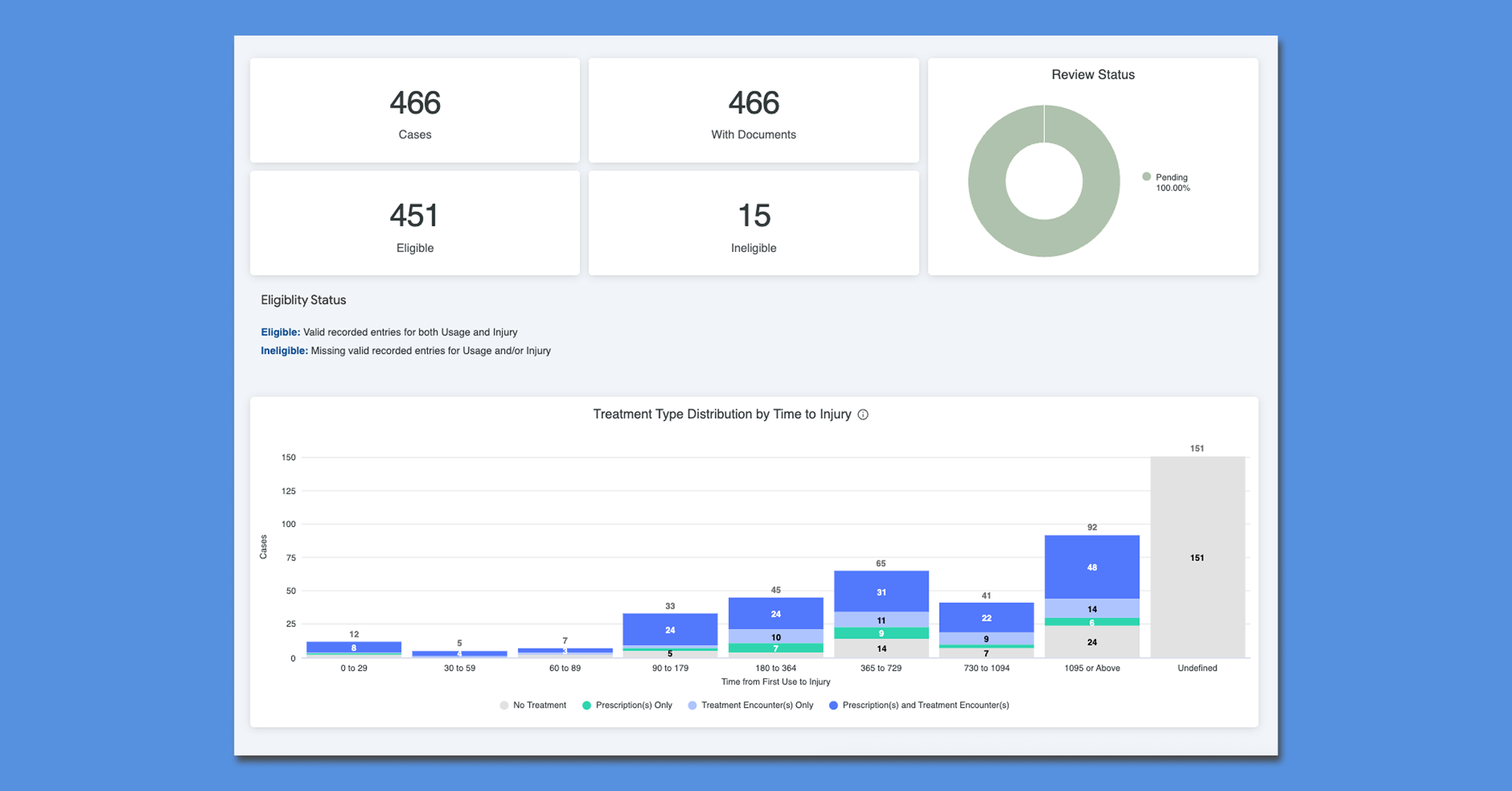
Use real-time analytics to visualize your claimant inventory by review status, eligibility, and distribution of treatment type.
Socia Media Explore Now SC (3)

Generate claimant work product

Extract and organize medical data into exportable work products.

Social Media Export

Frequently Asked Questions

What is the Social Media litigation about?
The Social Media litigation centers on alleged harm to adolescents and minors caused by social media usage patterns. Plaintiffs claim that major platforms like Meta (Facebook, Instagram), TikTok, and Snapchat were aware of harms such as social media addiction, negative social comparison, body image issues, suicidal ideation, self-harm, and eating disorders.
What specific injuries or mental health conditions are commonly associated with the Social Media litigation?

As of December 2024, key recognized injuries include social media addiction, lack of focus, ADD/ADHD, depression, anxiety, body dysmorphia, eating disorders (anorexia, bulimia), thoughts of self-harm, self-harm, suicidal ideation, suicide attempts, and suicide.

What proof is required to support a claim in the Social Media litigation?

To substantiate a claim, plaintiffs generally need to provide:

1) Evidence of Social Media Usage: Documentation or testimony confirming the extent and nature of the individual's use of social media platforms.

2) Medical Records: Diagnosis of mental health conditions such as depression, anxiety, eating disorders, or other related issues.

3) Treatment Documentation: Records of therapy, medication, or other treatments undertaken as a result of the condition.


When is the status of the Social Media litigation?

As of June 2025, the Social Media litigation is ongoing, with no settlements finalized. The timeline for potential settlements will depend on the progression of the litigation, including the outcomes of bellwether trials and negotiations between parties. Attorneys should stay informed about the litigation's developments to advise clients appropriately.


How do law firms manage large Social Media case inventories?
Pattern structures claimant records into standardized profiles that consolidate platform usage history, qualifying mental health diagnoses, treatment documentation, and relevant risk factors. Firms can assess their entire Social Media inventory consistently and understand how the docket aligns with litigation criteria rather than evaluating cases one at a time.
What documentation is commonly missing in Social Media claims?
Pattern evaluates the status of key sections in each claim, including evidence of platform usage, qualifying mental health diagnosis, and treatment history. When required information is absent or insufficient, Pattern flags the gap so firms know what to pursue before a case can move forward.
How does Pattern handle pre-existing conditions in Social Media claims?
Pre-existing mental health conditions are one of the most common case-level complications in this litigation. Pattern captures prior diagnoses, family history of mental illness, and unrelated risk factors so firms can assess causation strength at the case level before committing development resources.
How do firms prioritize Social Media cases for development?
Pattern's inventory analytics show eligibility status, injury distribution, treatment history, and case scoring across the full docket. Firms can identify which claims already meet criteria, which need additional records, and where targeted follow-up could strengthen cases that are close to eligible.
When should firms start evaluating their Social Media inventory?
Early evaluation gives firms visibility into their inventory before litigation requirements become clearer or settlement criteria are announced. Starting now allows legal teams to identify documentation gaps, assess case strength across the docket, and avoid last-minute issues when submission deadlines arrive.