
Back to all use cases

Evaluate every Ozempic and GLP-1 claim against the evidence that determines case strength.

Pattern Data gives law firms instant visibility into their entire GLP-1 docket. See which cases are strong, which need development, and where to focus resources, without manually reviewing each file.
Ozempic Dashboards Website  (1)
Military and Service Documents

Confirm drug exposure across your full inventory

Pattern identifies and classifies all GLP-1 product use, branded, generic, and compounded, and calculates each claimant's exposure window. Compounded use is automatically flagged, giving firms immediate visibility into the defense risk that dockets are quietly carrying.

intake

Identify qualifying injuries across both active tracks

The GLP-1 litigation has two distinct injury tracks: gastrointestinal (Gastroparesis, Ileus) and ocular (NAION). Pattern's lens is purpose-built for both, not just the primary GI track that most firms have structured their intake around.

Identify Exposure, Injury, and Treatments

Surface the evidence the court is requiring

Following Judge Marston's August 2025 ruling, Gastroparesis claims must be supported by objective diagnostic testing, specifically a gastric emptying study. Pattern identifies exactly which claimants have the required evidence and which have a documentation gap that needs to be closed.

strategic

Score every case and prioritize your docket

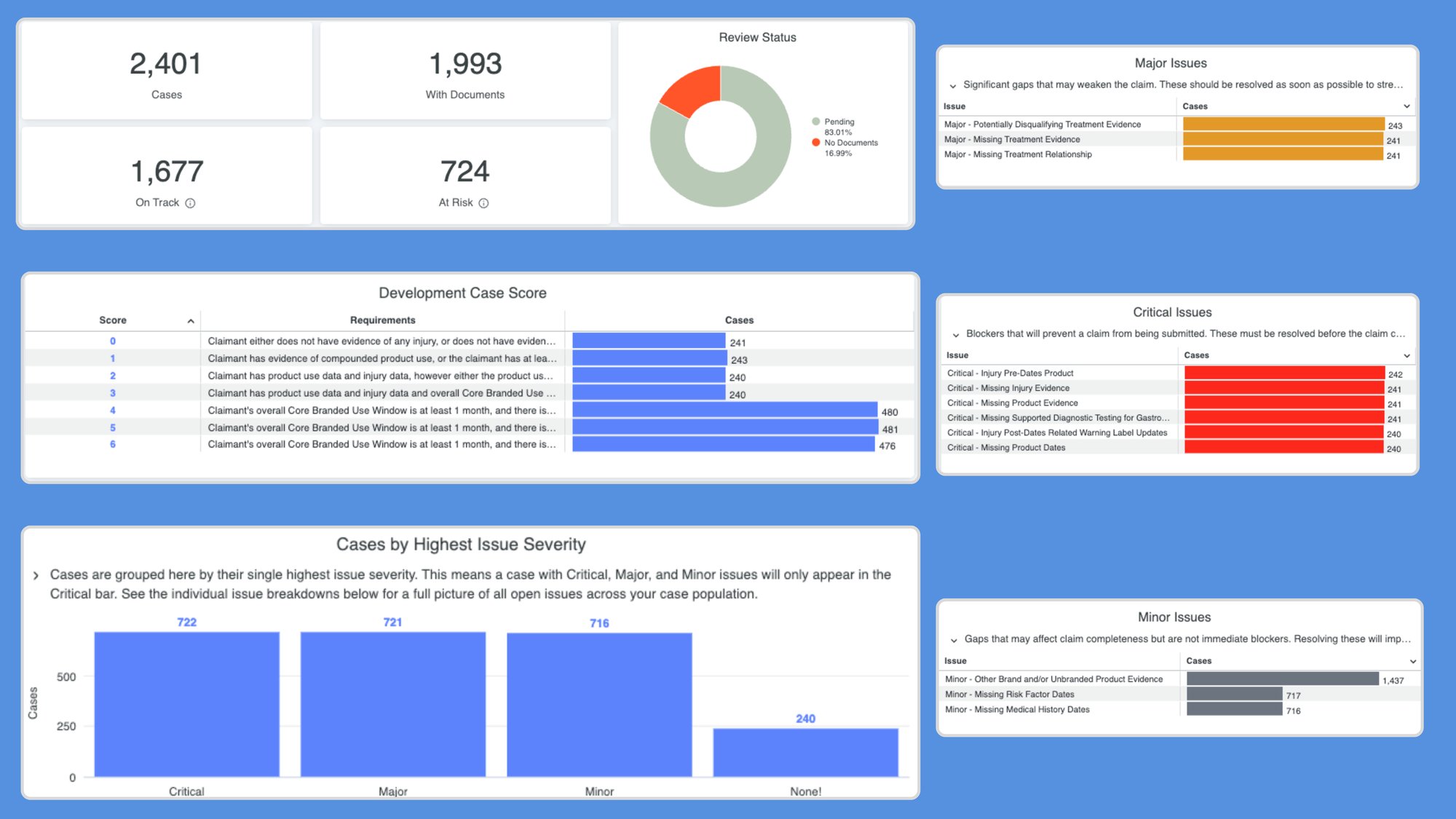
Every claimant receives a Development Case Score on a 0 to 6 scale, calculated from exposure type, injury classification, use duration, hospitalization evidence, and related surgery or death. Firms can rank their entire inventory in seconds.
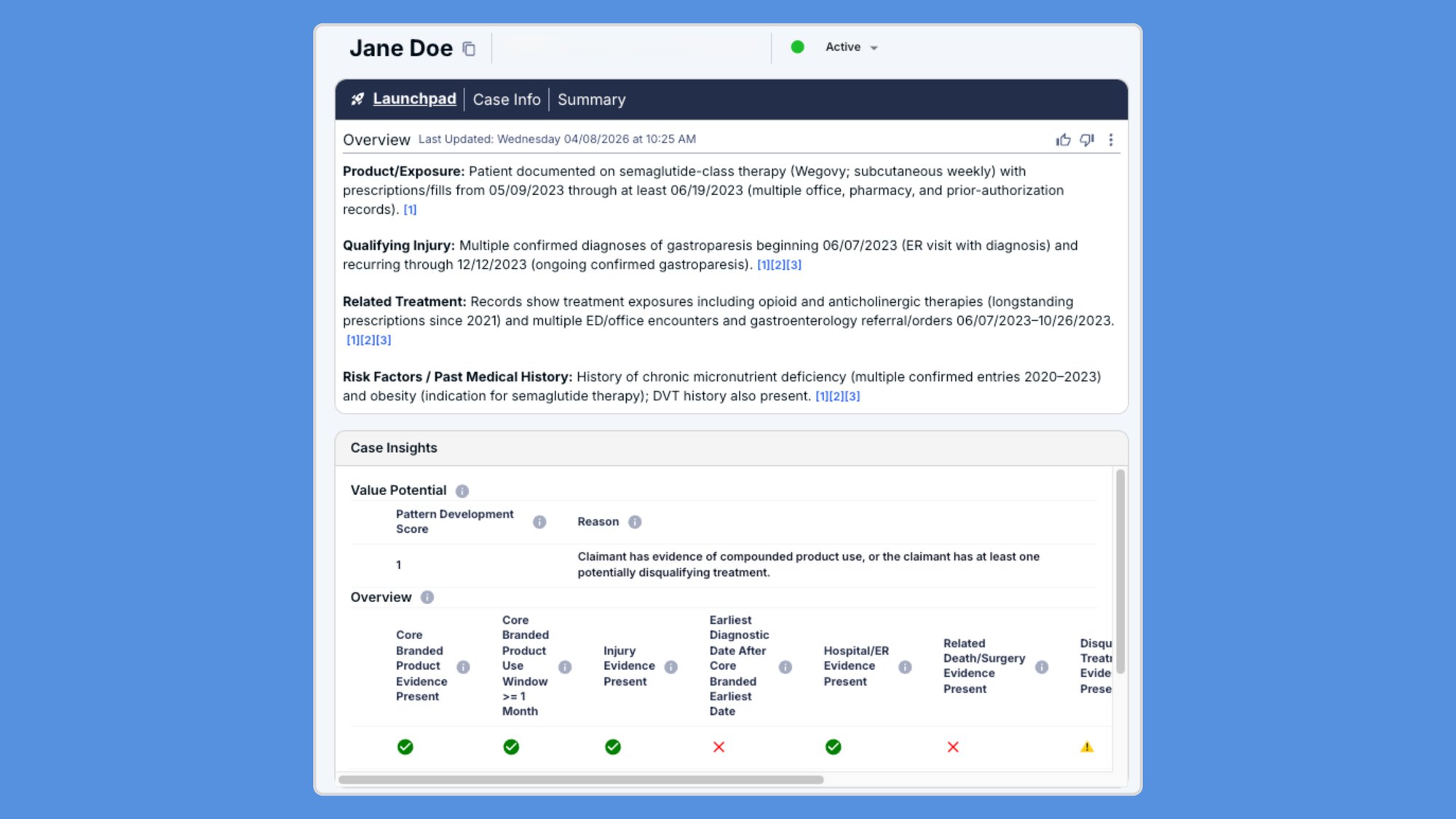
What Pattern evaluates in every GLP-1 claim.

Ensure each Ozempic case meets settlement criteria with thorough documentation and analysis.

GLP-1 product exposure and duration

Qualifying injuries across the GI and vision loss tracks

Diagnostic testing requirements, including gastric emptying study results

Hospitalization, ER visits, surgery, and related death

Defense risk factors including diabetes history, prior surgeries, and smoking history

Compounded GLP-1 use and its impact on claim viability

Generate claimant profiles

Pattern extracts and organizes data from medical records into structured claimant profiles, giving your team a clear view of exposure, injury, diagnostic testing, and treatment evidence for every case in your inventory.
Ozempic Claimant Profile

Understand your GLP-1 inventory instantly

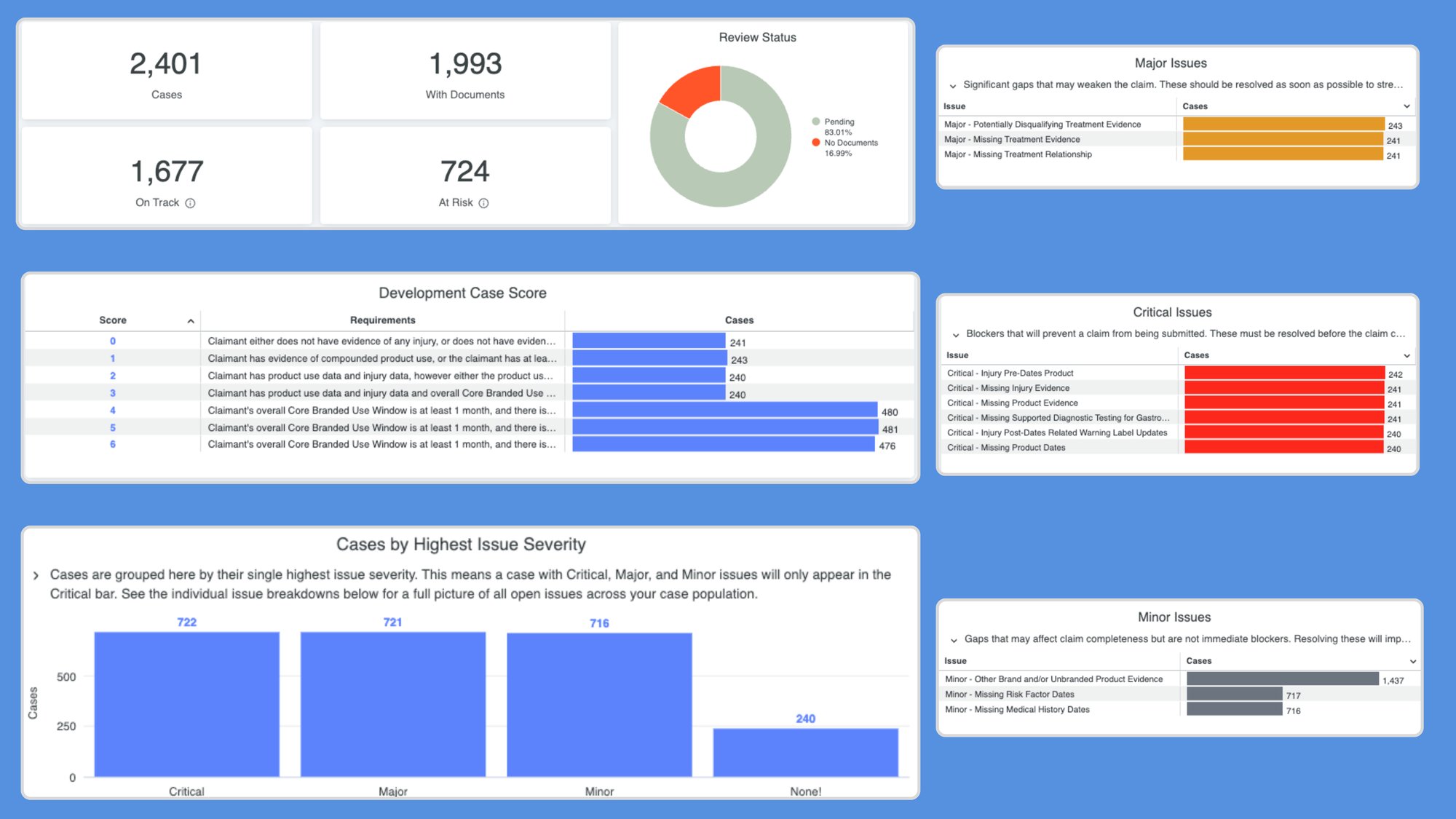
Interactive dashboards show case strength distribution, documentation gaps, and issue severity across your full docket, so your team knows where to focus without pulling individual files.
Ozempic Dashboards Website  (1)

Reviewer Guidance built into every profile

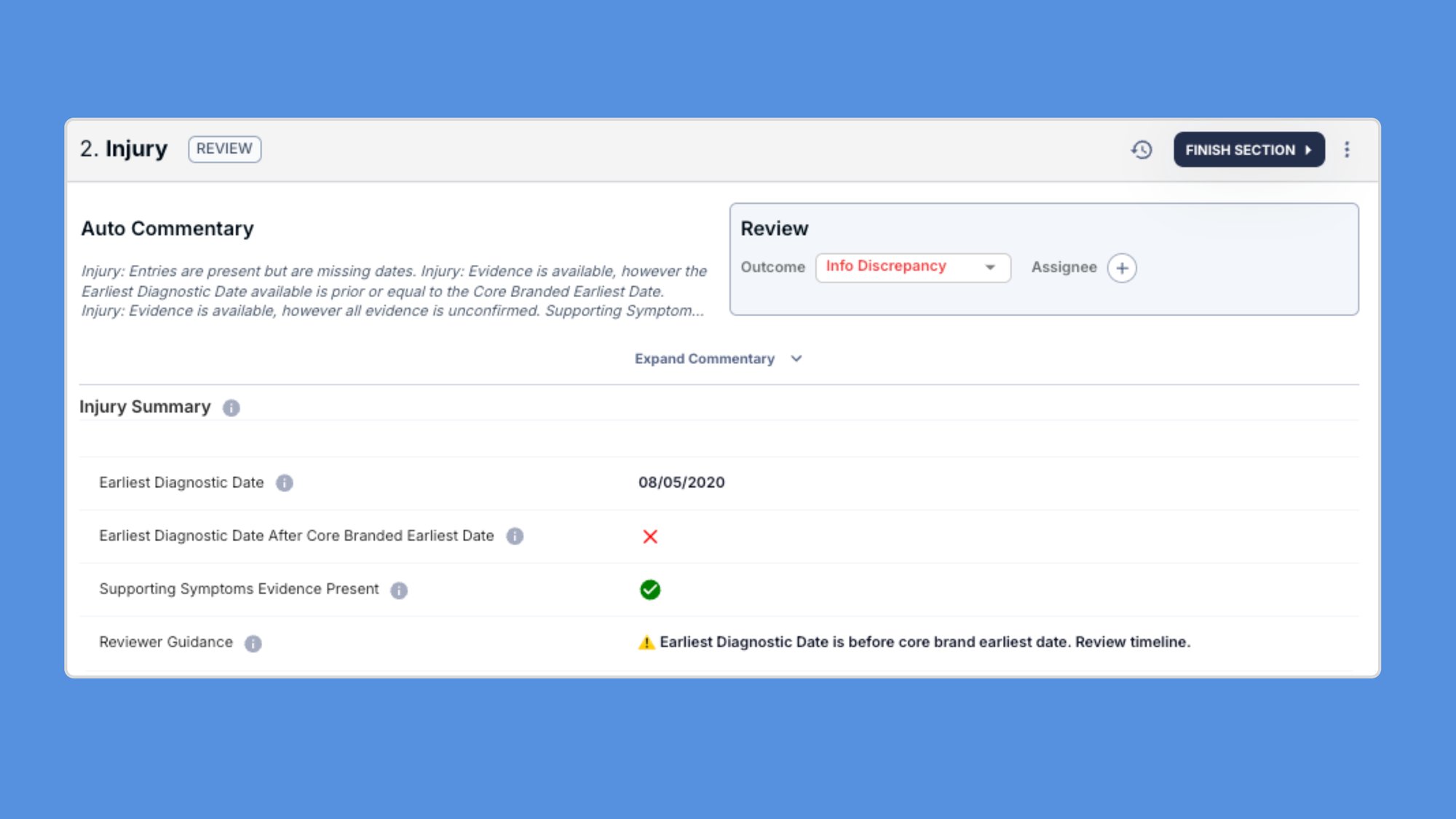
Pattern surfaces contextual flags directly within each claimant profile, identifying missing dates, unconfirmed diagnoses, documentation gaps, and timeline discrepancies, so reviewers always know what needs attention and why.
Ozempic  Reviewer Guidance

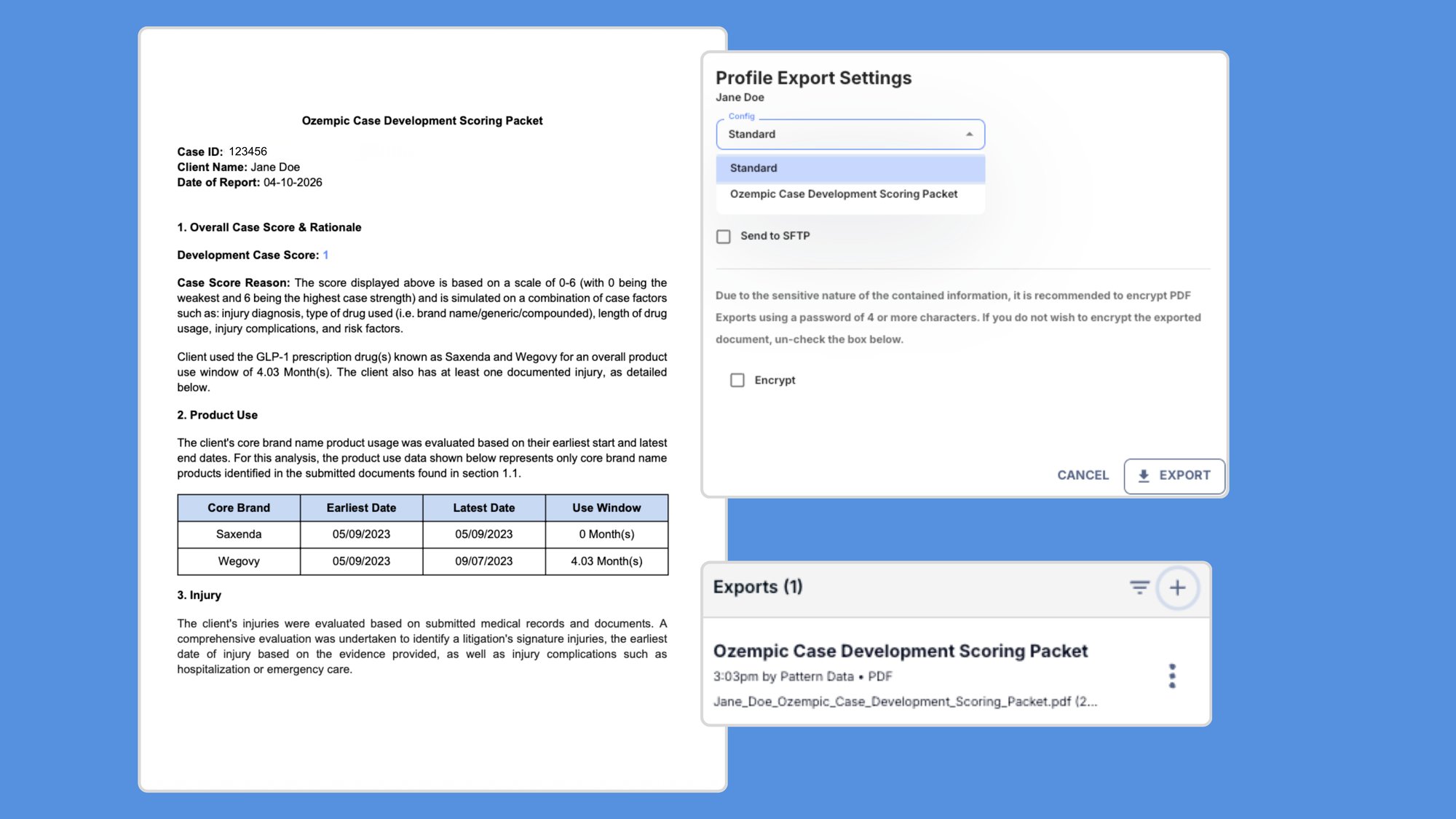
Generate claimant work product

Export structured case data including development scores, supporting evidence, and medical records in a format ready for attorney review and case development.

Ozempic_Web_Export

Frequently Asked Questions

What is the GLP-1 / Ozempic mass tort litigation about?

The GLP-1 mass tort involves claims that manufacturers of GLP-1 receptor agonist medications, including Ozempic, Wegovy, Mounjaro, Trulicity, and others, failed to adequately warn patients and physicians about severe and sometimes permanent side effects. The central theory is failure to warn: that manufacturers knew their drugs' gastric-slowing mechanism could cause serious gastrointestinal and ocular injuries but concealed or minimized that risk in their labeling.

What injuries qualify in the GLP-1 litigation?

The litigation has two active injury tracks. The GI track covers Gastroparesis, Ileus, and intestinal obstruction, along with additional injuries including Pancreatitis, Gallbladder Disease, Bowel Ischemia, Thiamine Deficiency, and Acute Kidney Injury. The ocular track covers NAION, or Non-Arteritic Anterior Ischemic Optic Neuropathy, a sudden and often permanent form of vision loss sometimes referred to as an eye stroke. Pattern's Lens is built for both tracks.

What documentation do Gastroparesis claims require?

Following Judge Marston's August 2025 ruling, Gastroparesis claims must be supported by objective diagnostic testing, specifically a gastric emptying study. Claims that have a Gastroparesis diagnosis in the medical records but no gastric emptying study on file are materially at risk. Pattern identifies exactly which claimants have the required documentation and which have a gap that needs to be closed before bellwether selection.

What is the compounded GLP-1 problem and why does it matter?

Manufacturers are expected to argue that claimants who used compounded, non-brand name GLP-1 formulations are outside their control and responsibility. This is a case-level disqualifier. Pattern automatically flags compounded use across the entire inventory, giving firms immediate visibility into the risk their dockets may be carrying without structured data capture for it.

How do firms prioritize GLP-1 cases before settlement criteria are finalized?

Pattern assigns every claimant a Development Case Score on a 0 to 6 scale, calculated from exposure type, injury classification, use duration, hospitalization evidence, and related surgery or death. This gives firms a litigation-independent case strength signal they can use today, before global settlement criteria are announced, to triage their docket and focus development resources where they matter most.

How does Pattern help firms manage the dual-track structure of this litigation?

Most firms have structured their intake around the GI track. The NAION vision loss track was established as a separate federal track in late 2025 and is now moving at an accelerated pace. Pattern's Lens captures both tracks from the initial build, so firms are not undercounting their NAION exposure or missing a growing claim category that the broader market has been slow to recognize.

What medical history factors does Pattern capture beyond exposure and injury?

Pattern structures medical history to surface information that is likely to be relevant to causation arguments, including diabetes history and A1C levels, prior GI surgeries, and smoking and alcohol history. Capturing this data early gives firms a more complete picture of each case before committing development resources, rather than encountering it later as a surprise.