
Back to all use cases

Depo-Provera Litigation: AI-Powered Case Review for Meningioma Claims

Streamline case evaluation and accelerate outcomes in Depo-Provera mass tort litigation with Pattern Data’s industry-leading AI. Our platform identifies key medical evidence, filters out ineligible claims, and delivers actionable insights across your entire docket.
Depo Analysis Report SC
Identify Exposure, Injury, and Treatments

Intelligent Data Extraction & Tagging

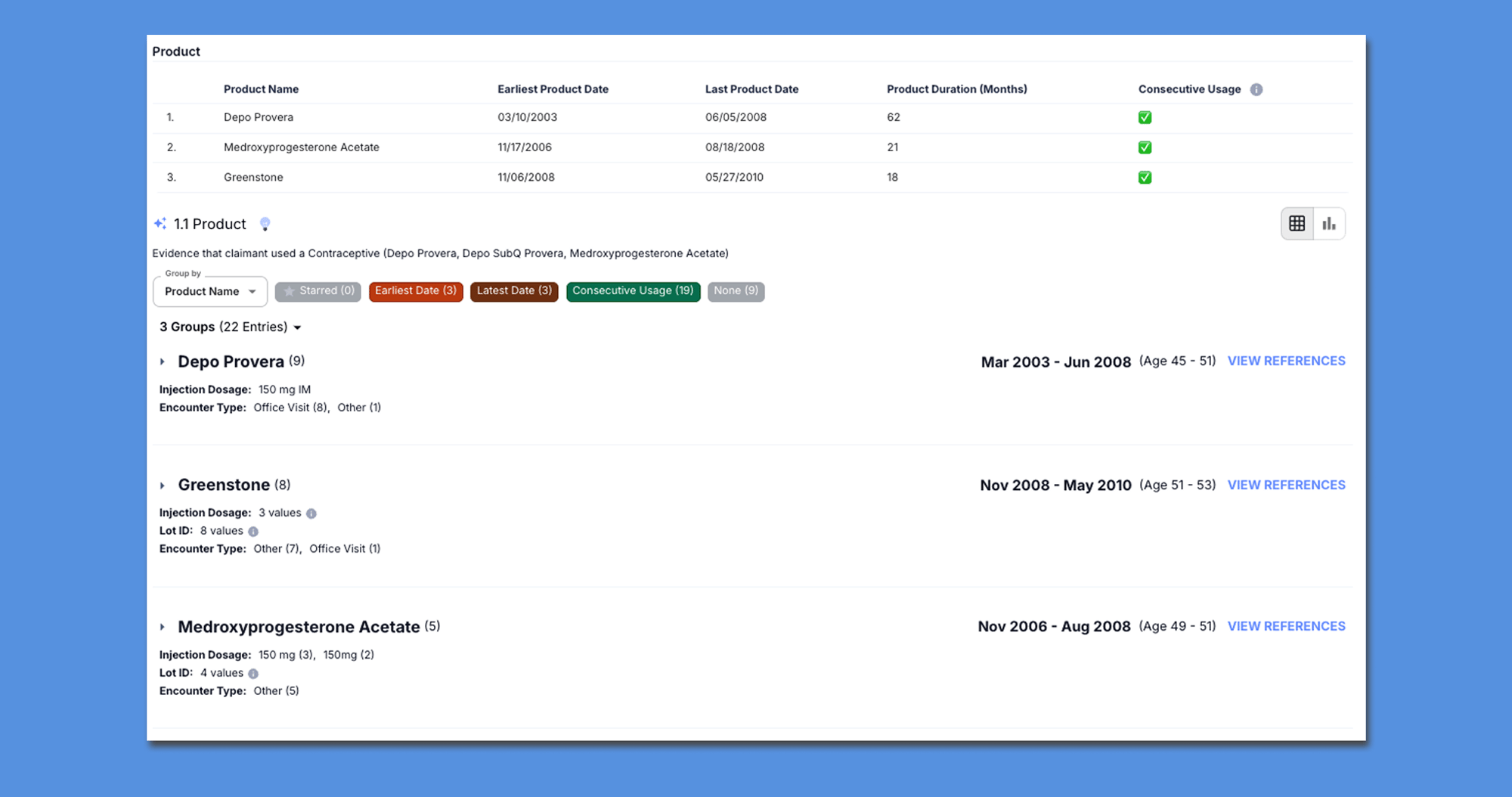
Automatically tags and bookmarks relevant Depo-Provera litigation criteria, such as product usage dates and tumor details, turning unstructured data into organized, actionable information for reviewer approval.

Military and Service Documents

Pattern Case Screening Score

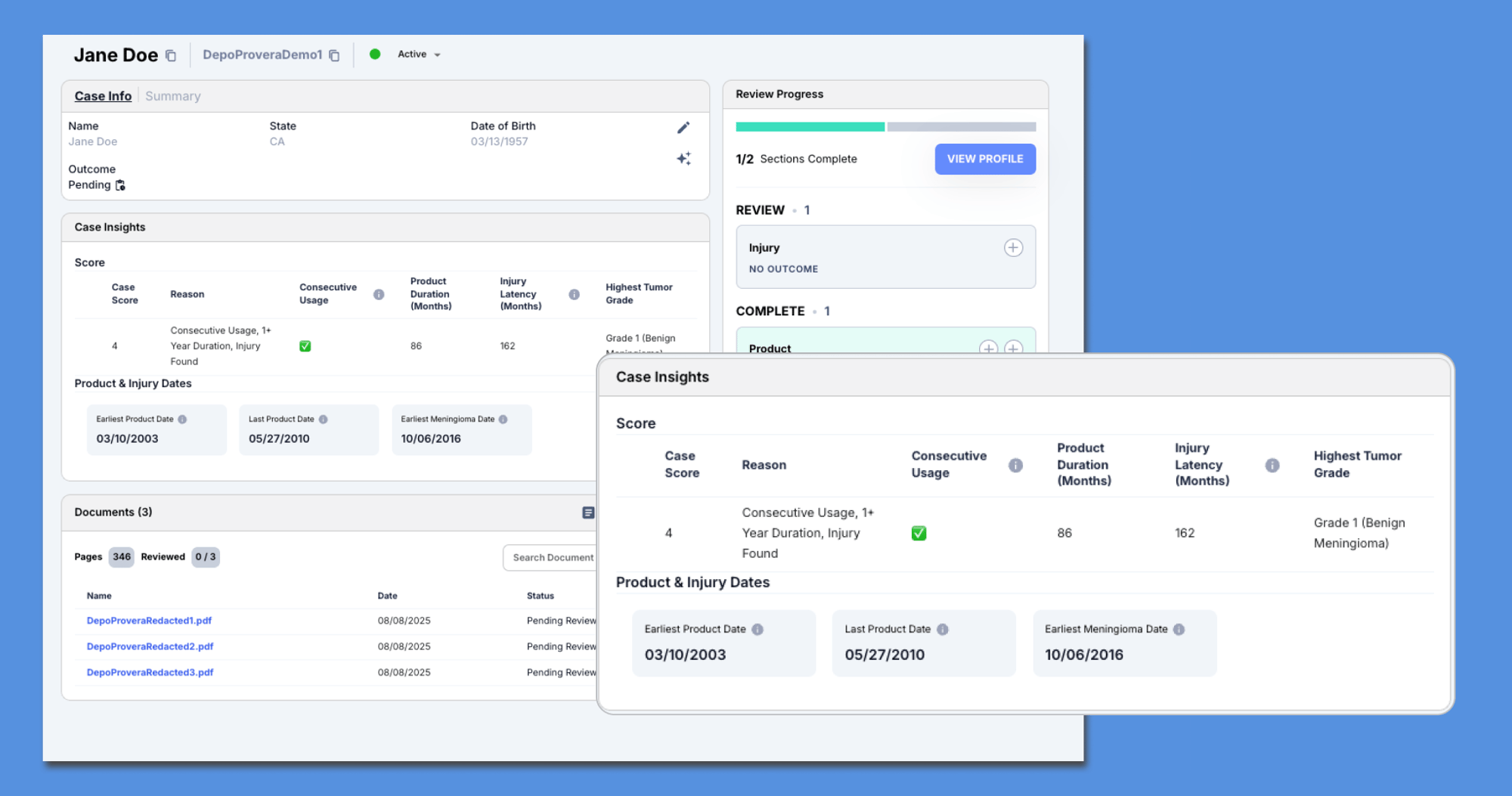
Derived from case evidence across multiple factors, enabling qualitative analysis by evaluating product usage, consecutive injections, duration, latency, and highest tumor grade for consistent, data-driven assessments.

intake

Visualize Case Inventory

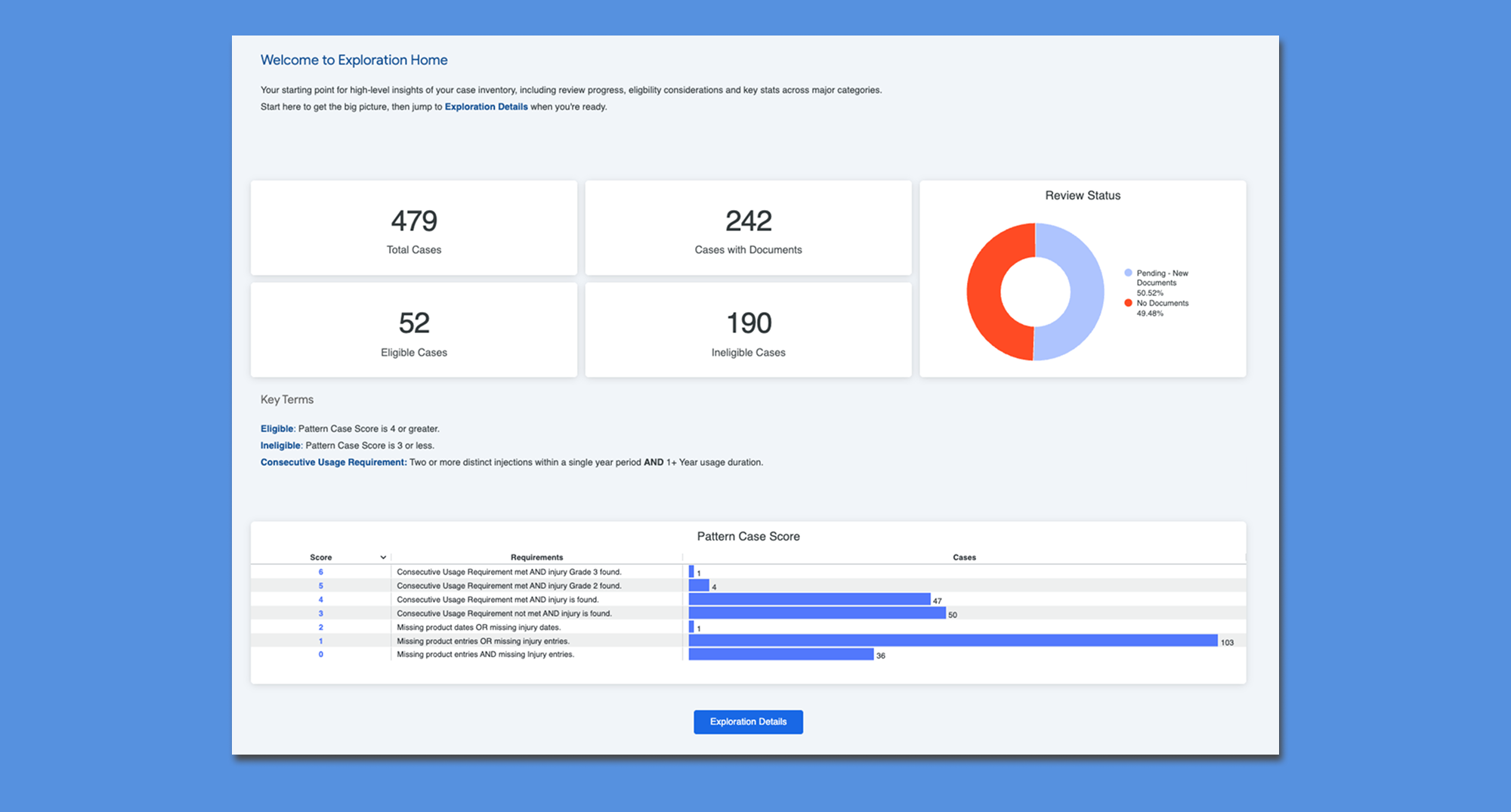
Robust reporting across your Depo-Provera litigation docket provides a clear overview of eligibility status, review progress, and scoring, utilizing structured claimant profiles that capture detailed product usage and injury data.

strategic

Claimant Work Product

Generate precise and customizable claimant work product within the platform, tailored as unique exports to streamline litigation strategy and ready cases for swift resolution.
What to look for in the Depo-Provera lawsuit claims

Ensure each Depo-Provera case meets criteria with thorough documentation and analysis using Pattern.

Product usage details – injection dates, brand name, and evidence of consecutive usage

Diagnosis details – meningiomas and related conditions such as pituitary tumors or pseudotumor cerebri

Tumor specifics – tumor grade and precise diagnosis date

Latency period – time between Depo-Provera administration and injury diagnosis

Medical documentation – pathology, radiology, and operative or progress reports confirming use and diagnosis

Treatment history – surgeries, medications, and radiologic interventions noted in records

Analyze Depo-Provera claimant profiles

Access and analyze detailed claimant profiles, featuring the Pattern Case Score along with consecutive usage, product duration, injury latency, highest tumor grade, review progress, and related documentation.
Depo_ClaimantProfile&Case Insights_SC

Review and filter AI-powered tags

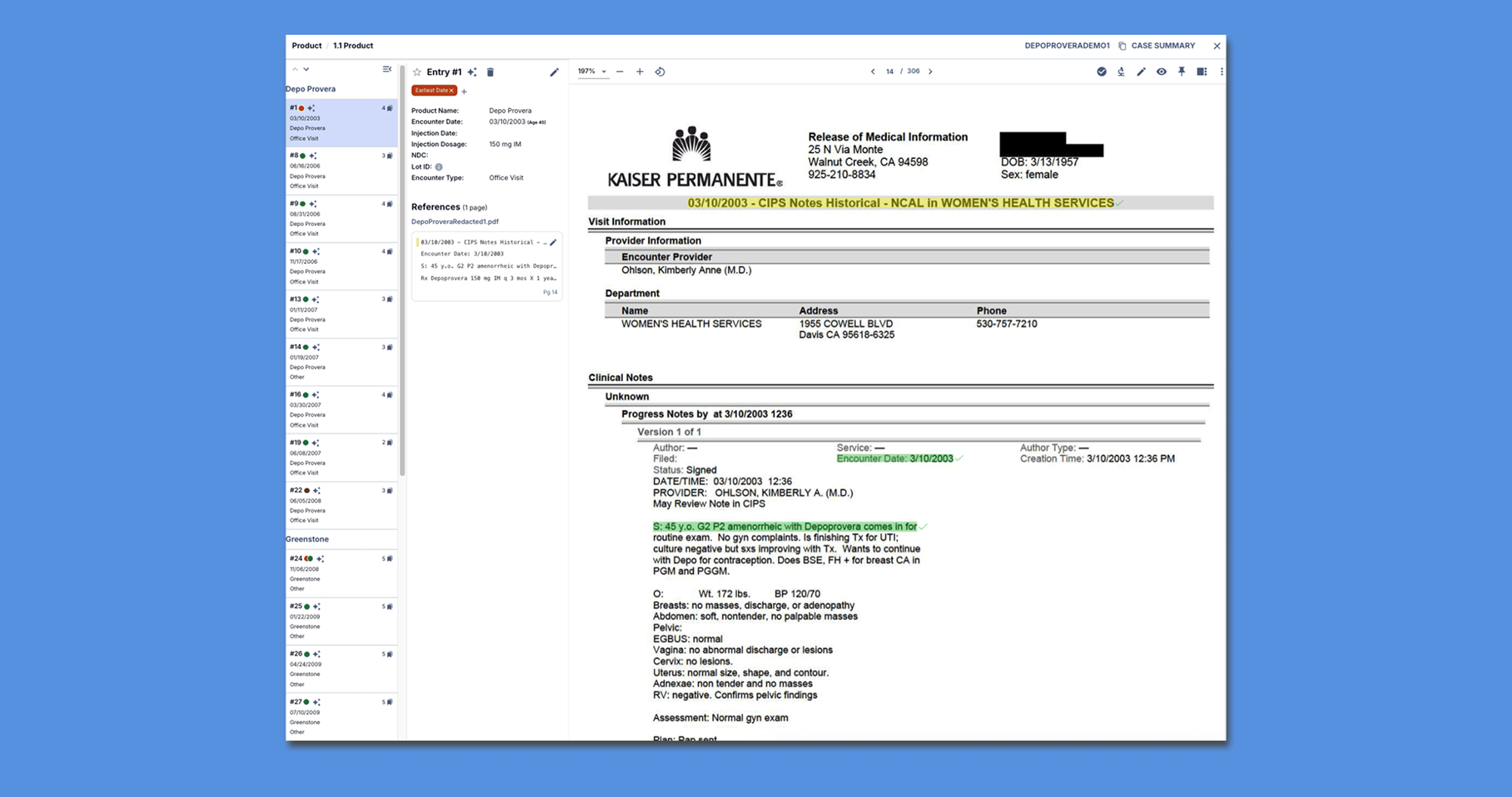
Review and filter AI-powered tags that highlight significant entries, providing critical context for your cases.
Depo_TagsBookMark_SC (1)

Bookmark reference pages

Pattern Data highlights the most relevant reference pages and key data points for optimized work product exports.
Depo_References_SC

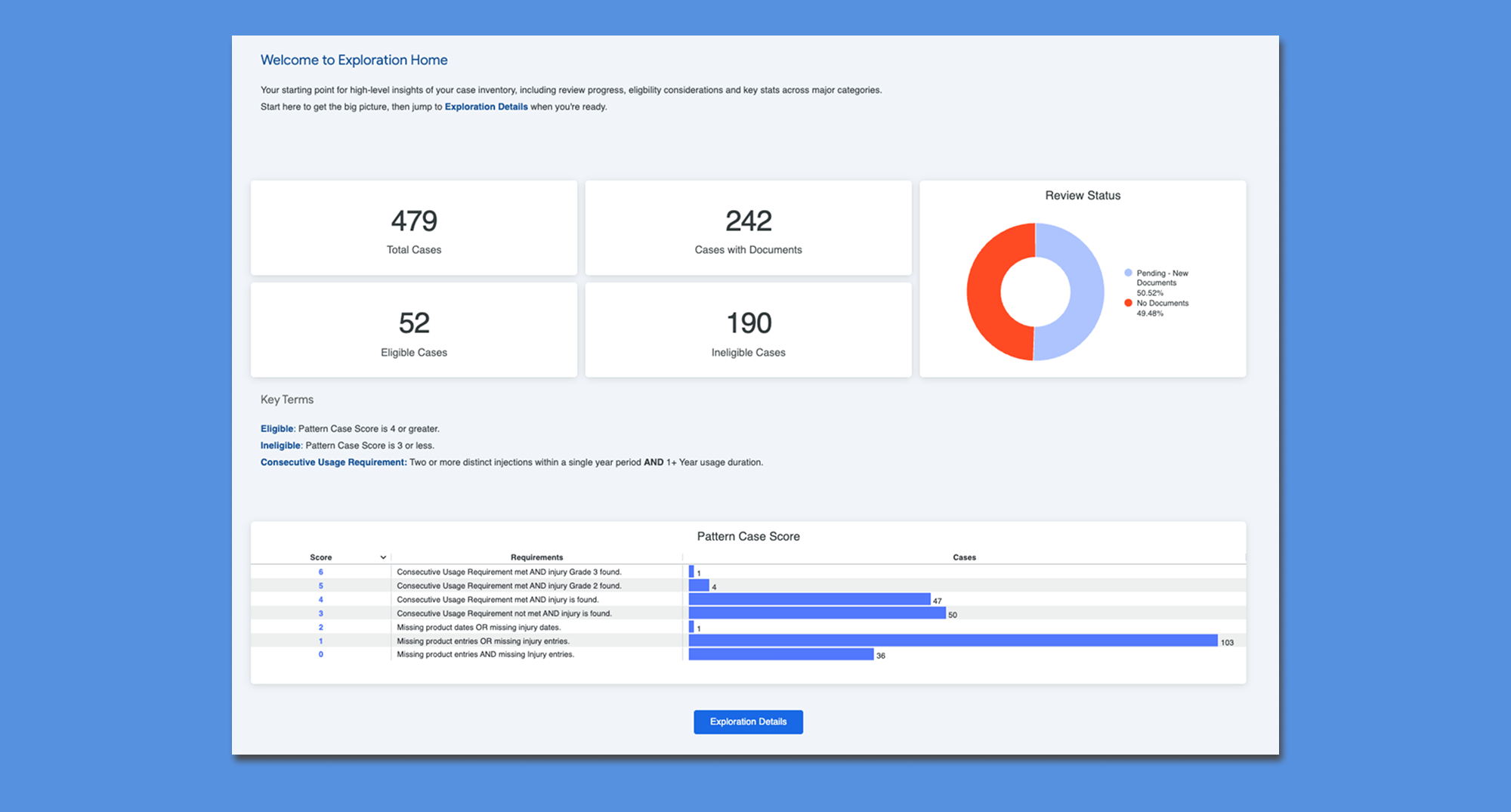
Track claim inventory across injury categories

Use real-time analytics to visualize claimant inventory by eligibility status, available documentation, Pattern Case Score, product usage history, and injury details.
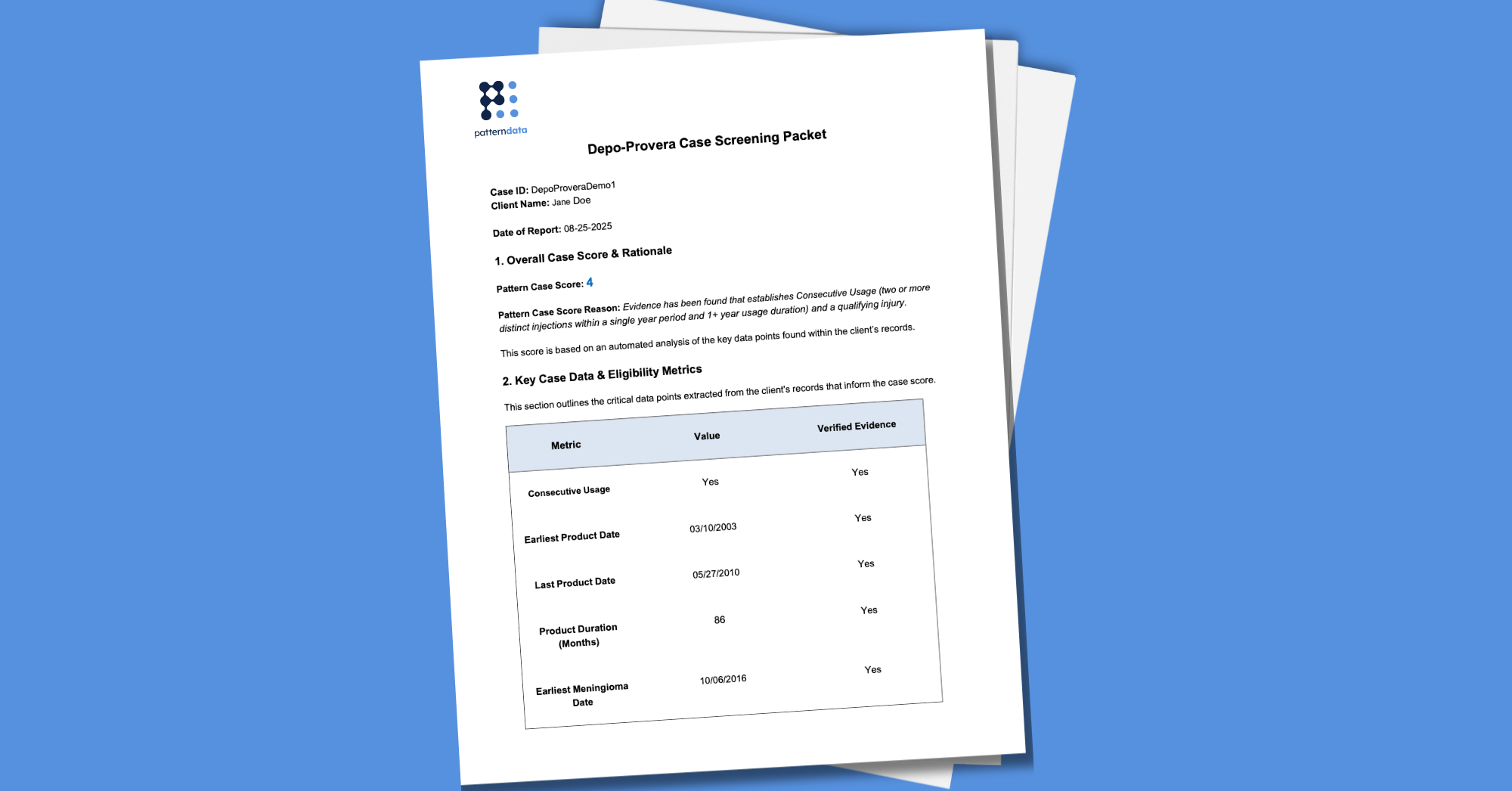
Depo Analysis Report SC

Generate claimant work product

Extract and organize product and medical data into exportable work products.

Depo_Export_SC_Canva

Frequently Asked Questions

What is the Depo-Provera lawsuit about?
The Depo-Provera mass tort litigation involves claims that the birth control injection Depo-Provera (medroxyprogesterone acetate) caused serious side effects, including benign brain tumors called meningiomas. Plaintiffs allege that the manufacturer failed to adequately warn patients and healthcare providers about these risks.
What injuries are linked to Depo-Provera?

Primary injuries include meningiomas (all grades and subtypes), which often require surgical removal. Other related diagnoses may include pituitary tumors and pseudotumor cerebri.

What is a meningioma?

A meningioma is a tumor that develops in the meninges, the protective layers surrounding the brain and spinal cord. While usually benign, meningiomas can cause serious neurological symptoms and often require surgery or radiation treatment.


What documentation is needed for a Depo-Provera claim?

To substantiate a claim, plaintiffs generally need to provide:

  1. Evidence of Depo-Provera Usage: Documentation confirming administration of Depo-Provera, Depo SubQ Provera, or medroxyprogesterone acetate injections, including dates and consecutive usage history.
  2. Medical Records: Diagnosis of a qualifying injury such as a meningioma (any grade or subtype), supported by pathology reports, imaging results, or operative notes.
  3. Latency and Treatment Documentation: Records showing the time between first Depo-Provera exposure and diagnosis, along with any related surgeries, medications, or radiation treatments.


What treatments are common for Depo-Provera-related injuries?
Treatments for meningiomas may include surgical removal, radiation therapy, and medications to control symptoms such as seizures or swelling.
How does Pattern Data support Depo-Provera legal teams?
Pattern helps firms quickly review and assess Depo-Provera claims by standardizing medical records into searchable profiles. Key details—such as product usage, consecutive injections, duration, latency, and tumor grade—are captured and scored using the Pattern Case Screening Score, giving legal teams a clear, qualitative view of claim strength and eligibility.
How do law firms manage large Depo-Provera case inventories?
Pattern converts unstructured claimant records into standardized profiles that consolidate product usage history, tumor details, latency periods, and treatment documentation. Firms can review cases consistently and understand how their entire inventory aligns with litigation criteria rather than evaluating cases one at a time.
What documentation gaps are common in Depo-Provera claims?
As each claim is processed, Pattern evaluates the status of key sections including product usage evidence, qualifying injury documentation, tumor grade, and latency period. When required information is missing or unclear, Pattern flags the gap and indicates what documentation may be needed before the case can be fully evaluated.
How do firms prioritize Depo-Provera cases for development?
Pattern provides inventory-level analytics showing claim readiness, documentation gaps, and case scoring across the firm's full Depo-Provera docket. This allows firms to identify which claims already meet criteria, which need additional records, and where further development could strengthen a case before any settlement program is announced.
What happens to Depo-Provera cases if litigation criteria change?
Mass tort litigation often evolves as new science or legal developments emerge. Because claim data is already structured in Pattern, firms can update evaluation logic across their entire inventory without reprocessing records from scratch. Cases are automatically reassessed against updated criteria.
When should firms start evaluating their Depo-Provera inventory?
Firms do not need to wait for a settlement to begin evaluation. Starting early allows legal teams to organize claimant records, identify documentation gaps, and understand how their inventory is positioned. Early analysis helps firms prepare stronger cases and avoid delays once litigation progresses toward resolution.