
Hair Relaxer lawsuit case evaluation: streamline screening and claimant review
Pattern Data empowers law firms to review Hair Relaxer litigation cases with AI-driven precision, capturing product use, qualifying injuries, and risk factors to filter out ineligible claims and accelerate case preparation.

Intelligent data extraction & tagging
Automatically identifies and tags Hair Relaxer litigation criteria including earliest and latest product use dates, exposure duration, hormone-related treatments, cancer diagnoses, and highest stage. Transforms unstructured medical records and fact sheets into organized, review-ready evidence.

Comprehensive claimant profiling
Create standardized profiles that consolidate product usage, medical history, and gynecological conditions. Profiles capture uterine, endometrial, and ovarian cancers as well as fibroids, endometriosis, genetic findings such as BRCA1/2, and family cancer history — providing a complete view of claimant eligibility.

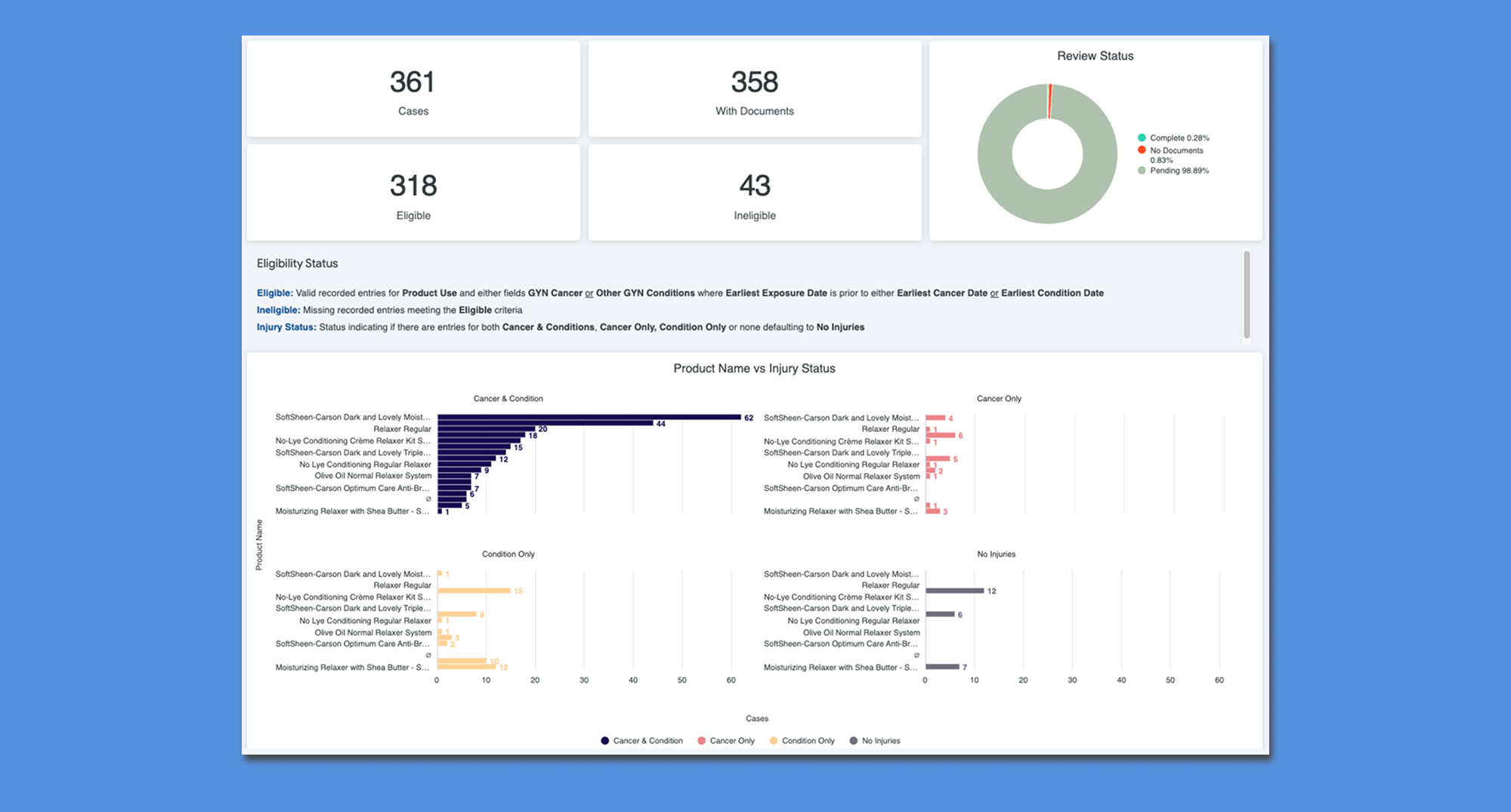
Visualize case inventory
Get a real-time view of Hair Relaxer claims by eligibility, injury status, product use, and treatment history. Dashboards surface trends across cancers and gynecological conditions, track surgeries and related medical history, and highlight risk factors such as hormone treatments, genetic testing, and BRCA findings. This gives your team clarity to spot gaps, confirm strengths, and prioritize cases for review.

Claimant work product
Generate submission-ready exports that compile verified claimant data, including product use, qualifying cancers and conditions, treatment history, medical background, and risk factors. These reports provide clear, consistent work product that can be shared across teams or submitted as part of litigation requirements.
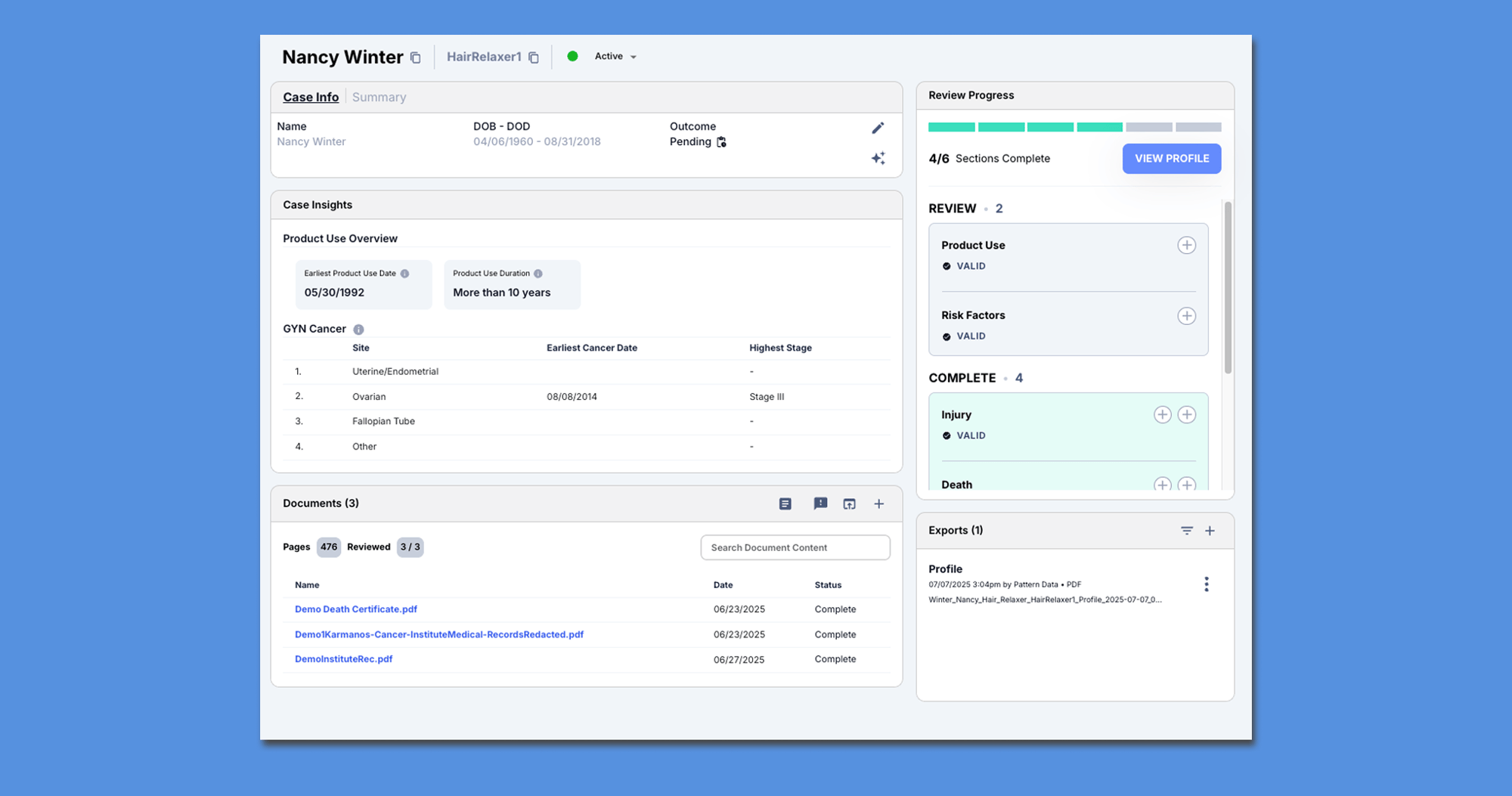
Analyze Hair Relaxer claimant profiles
Access detailed profiles that combine product use timelines, cancer dates and stages, risk factors, and treatment history, alongside review progress and supporting documents.

Review and filter AI-powered tags
Automated tags highlight earliest cancer dates, stage, and related conditions, helping reviewers validate key injuries and risk factors without searching page by page.
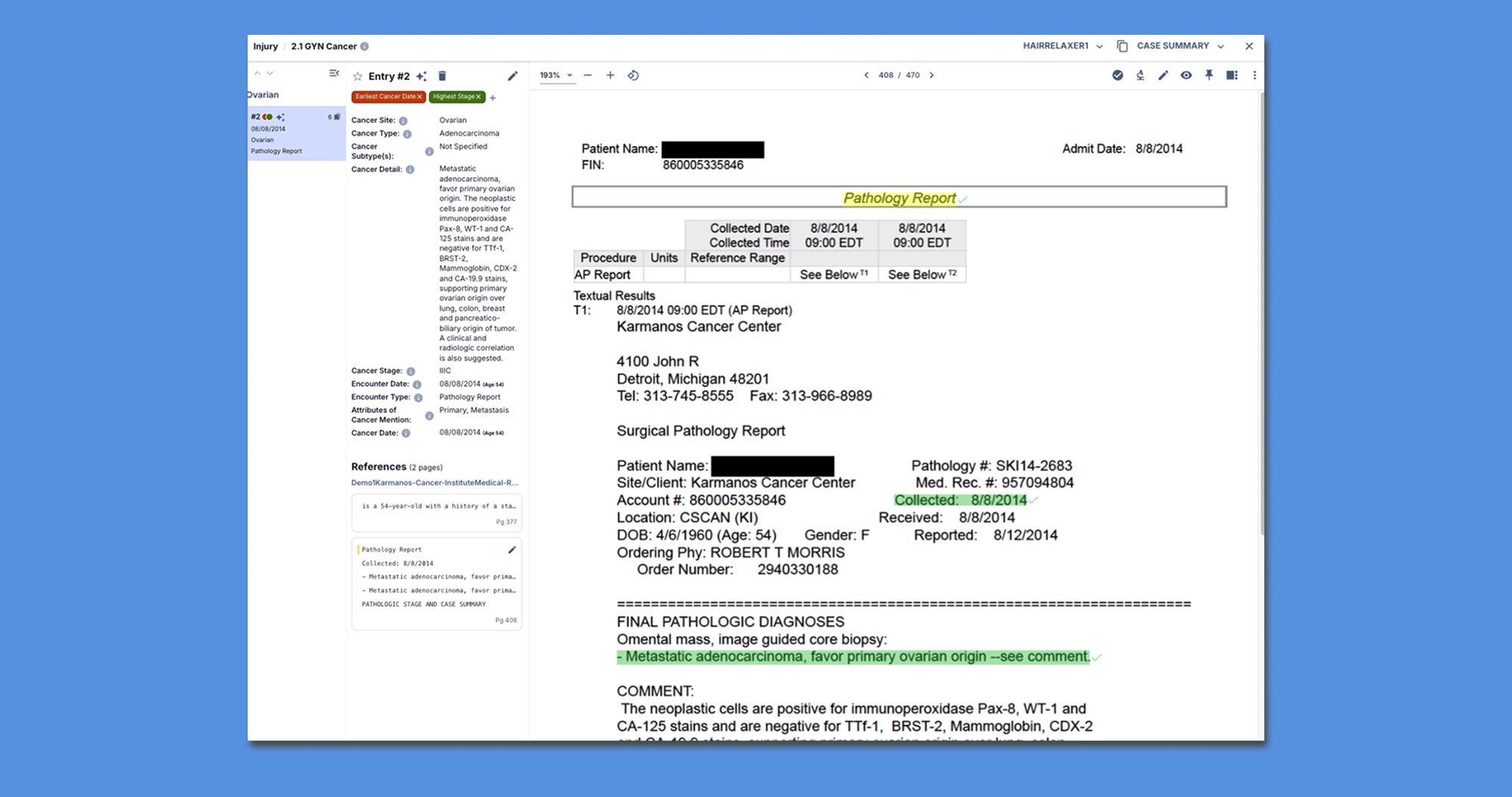
Bookmark reference pages
Pattern Data highlights the most relevant pathology reports, treatment notes, and medical history pages tied to gynecologic cancer diagnoses. Reviewers can quickly confirm key findings and ensure consistent documentation for Hair Relaxer case exports.
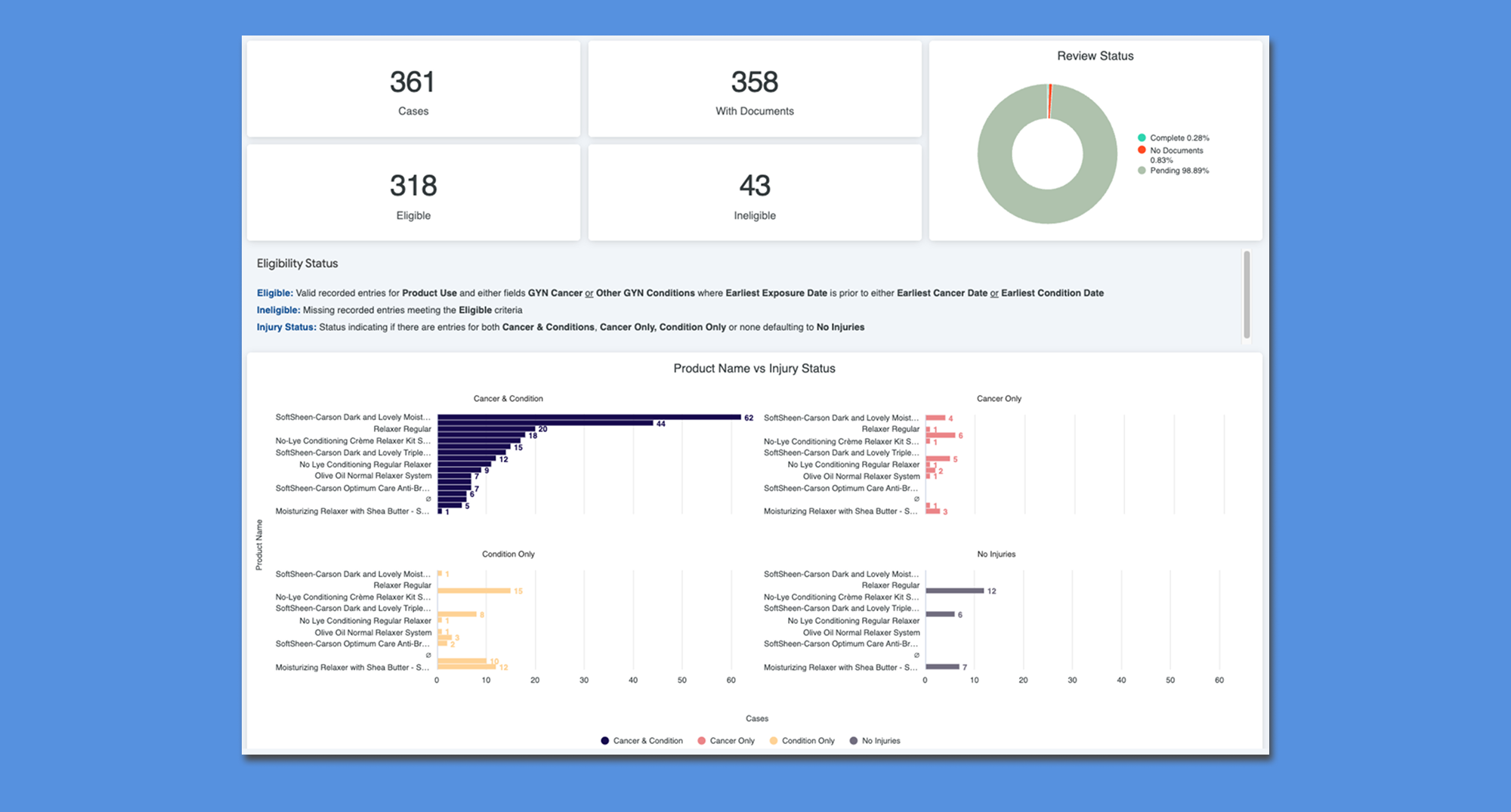
Track claim inventory across injury categories
Pattern Data’s dashboards turn Hair Relaxer case data into actionable insights, giving firms a high-level view of review status, eligibility, and injury distribution. Visual reports surface bottlenecks, highlight trends across products and conditions, and show which cases are ready for next steps. This helps teams manage dockets more efficiently and make informed decisions.

Generate claimant work product
Produce standardized Hair Relaxer exports that capture exposure dates, injury status, and medical record evidence in a single file. These organized reports are ready for submission, giving firms a clear, consistent work product that accelerates case processing.