
See where every Talc case in your inventory stands
Plaintiff firms have run talc inventories on Pattern for several years. Pattern structures the medical, exposure, and citizenship record for every case so your team can work a full inventory against your own criteria.
.png?width=2000&height=1125&name=talc-header-cascade-v2%20(1).png)
Key capabilities

Structure the medical record
Pattern extracts affidavits, pathology reports, genetic testing, and treatment history from source documents and organizes them into one case file.

See the full diagnosis chronology
A claimant's history often contains more than one key event: diagnosis, progression, remission, or recurrence. Pattern locates each one in the record and lays them out in a single chronology.

Apply your criteria consistently
Your team sets the criteria. Pattern applies them the same way to every case in the inventory and flags where documentation is incomplete.

Validated once, carried forward
Once your team validates a case, the structured data moves into the export your firm needs. No second review pass, no re-keying.
The platform
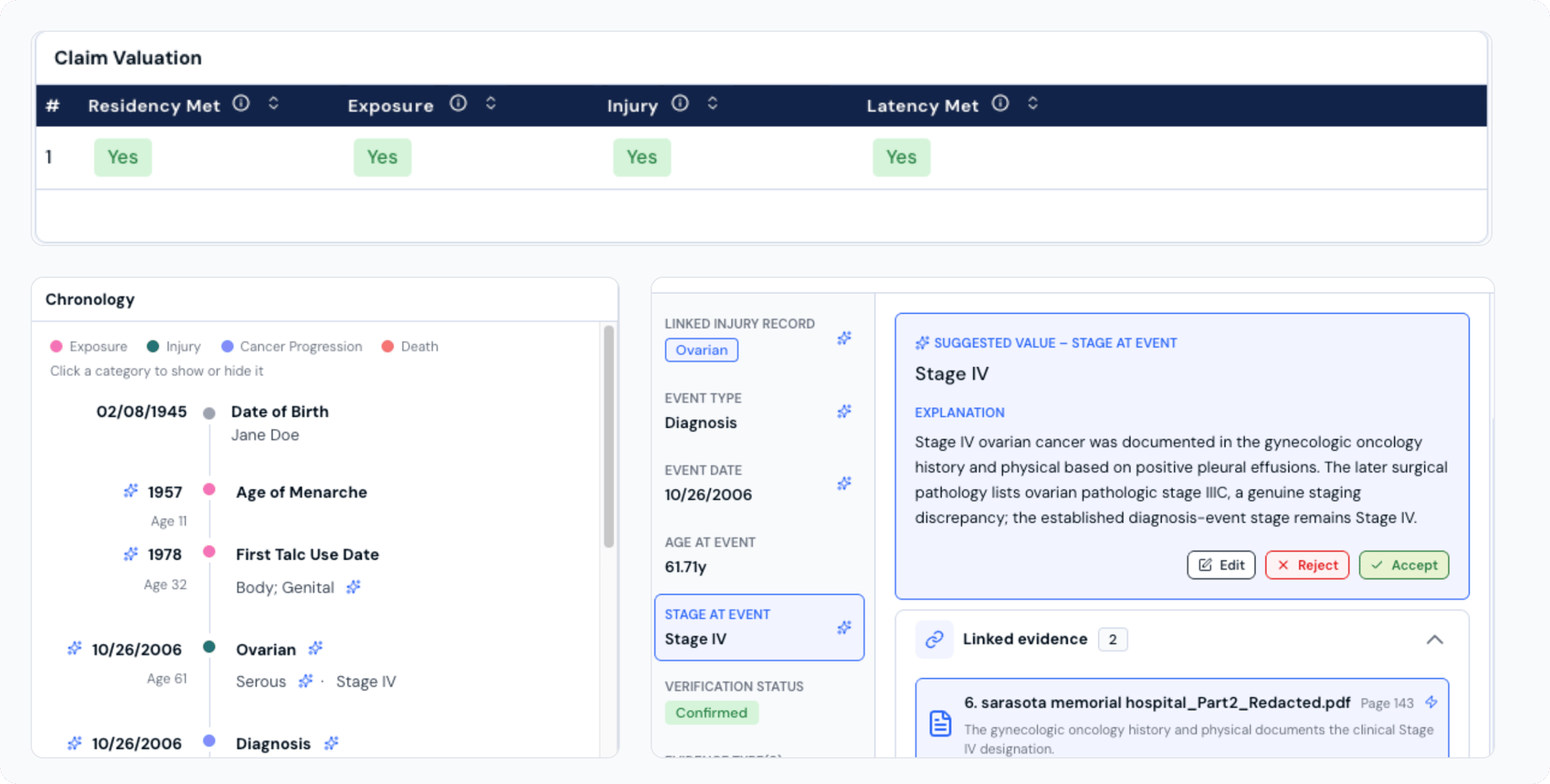
The case file
Every case opens to one view: the chronology, the criteria fields with their source records, and the open items list.
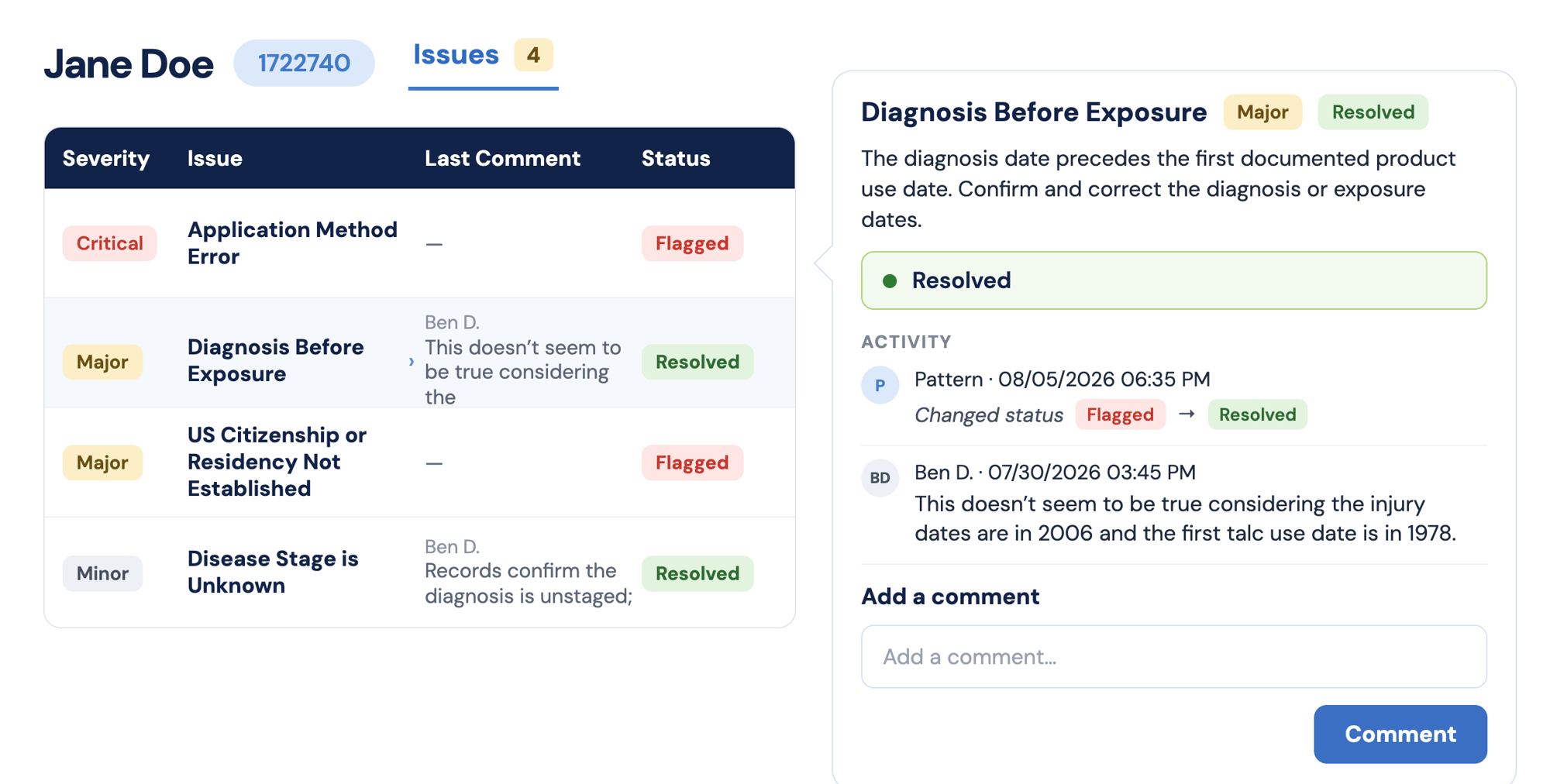
Open items, scored by severity
Each gap is scored Critical, Major, or Minor and names the specific record or field needed to close it.
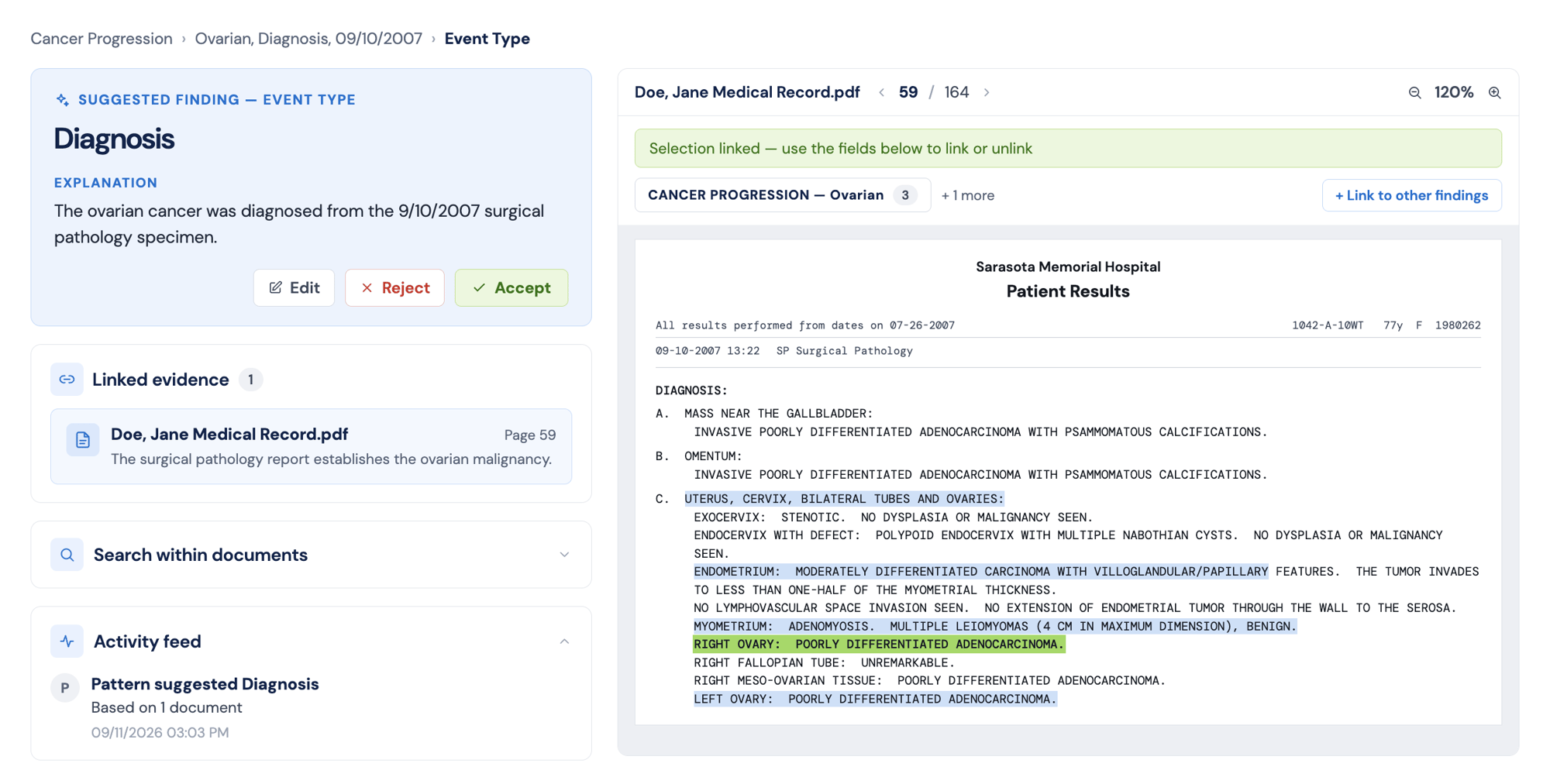
Every field traced to its source
Each extracted value links back to the page in the record it came from.
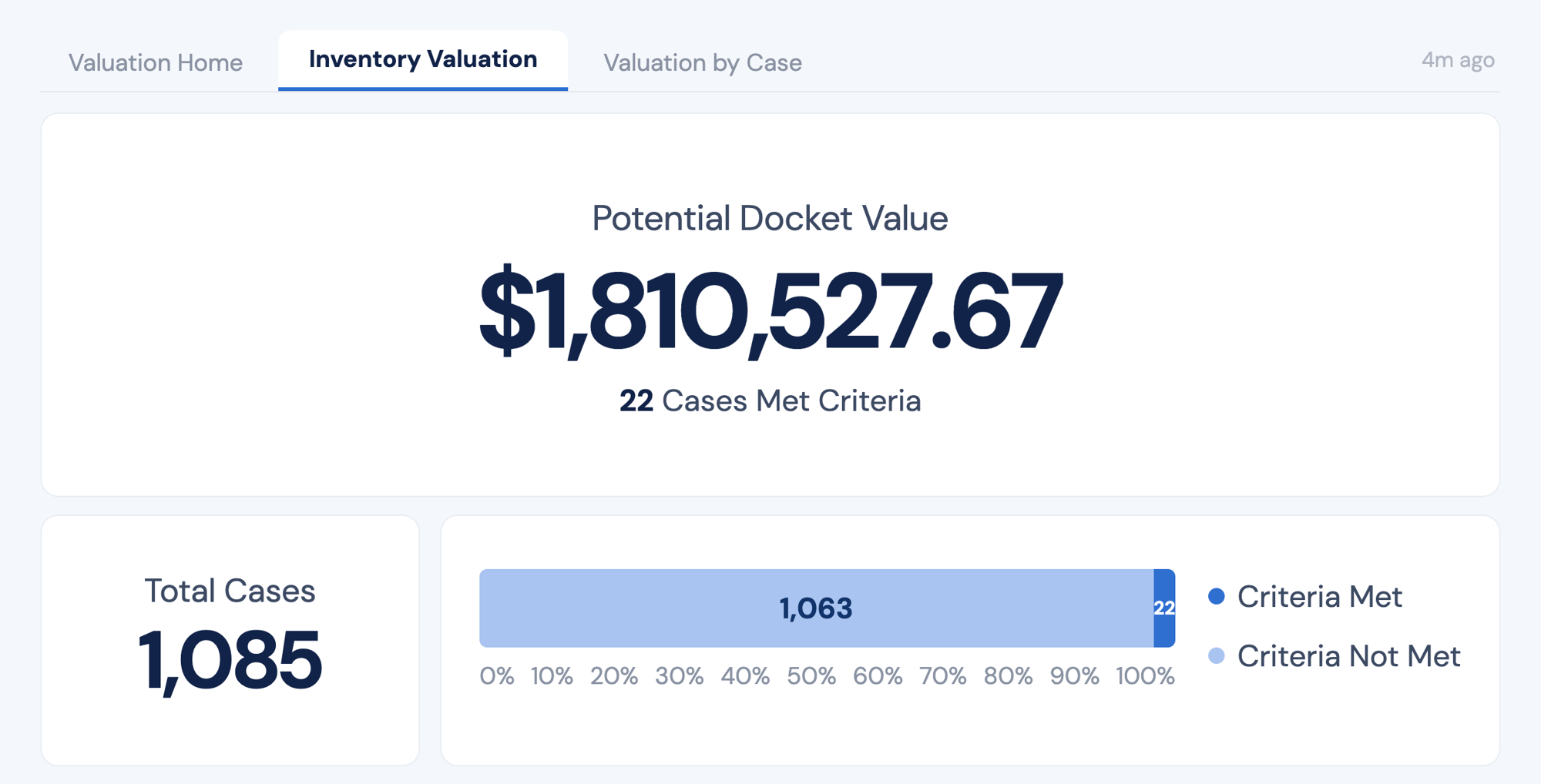
Inventory status across the docket
Case counts by documentation status, open items by severity, and review progress for the full Talc inventory.